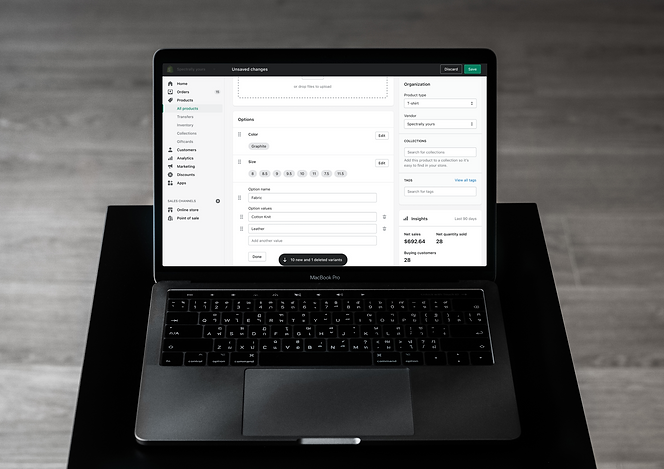
SHOPIFY Variant Management
Role: UX Manager, leading multiple Product Groups
Team: 1 Design Lead, 2 Product Designers, 1 Content Designer, 1 UX Dev
Background: A new team to the problem space, and challenged with defining a problem worth solving. This team set out to focus on a UX problem that would increase the usability of a core product.
Duration: 8 Months
Leadership Playbook: Provide vision & direction through quality principles. Forge alliances across a new team, and with executives. Operationalize the team; keep things moving efficiently by standardizing the design feedback process.
Problem Statement
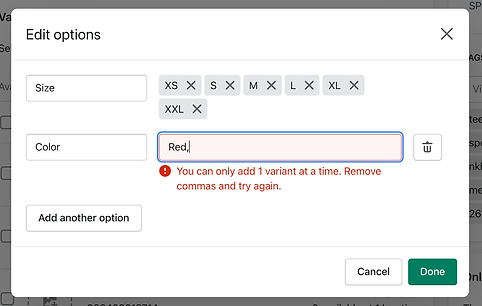
Currently merchants cannot extend their product offering through adding new options and values. The only in-admin methods to add new variants is a tedious manual process of 1 by 1, or through duplication which poses other risks.

Problem Sizing
Shopify is preventing merchants from managing even the simplest multi-variant product catalogs natively due to ineffective variant management. This a core workflow, and the workarounds so painful, that it’s become the no. 2 merchant frustration (by support volume) in the products space.

Opportunity Sizing
Our long-term strategy is to make it possible for merchants to manage all of their product catalog within Shopify. We need to make adding new variants more efficient now, because soon, in a world of > 100 variants per product, this problem will only get worse. This capability will become more important than ever before as merchants will be able to create much larger variant catalogues.
.png)
Scope
This project was originally scoped to only the UI in which merchants generate variants. Through my leadership, I coached the team in building UX rationale to develop an augment that would enable us to extend the scope, in the name of solving the right problem, in the right way, that matched merchants workflows and beat their expectations

Metrics of Success
Reduce volume of support tickets about adding variants after product creation by 40%.
In Shopify admin (web), it’s possible to add a new option with multiple values to a product —with correct images, prices, SKUs —in less than 5 minutes, against our set baseline.

Desired Outcome
This project will make it easy for merchants to expand a product offering by adding new options and values at scale.
The desired outcome is to build an experience that can scale with our future view of variant management, and quantifiably save our merchants time through efficient UI. Merchants would retain merchants workflows in the admin.
Context
A Fragmented Experience

UX Principles
.png)
Scalability
Solution needs to scale beyond the current limits of the technical model. This needs to be clearly demonstrated in the UI.

Efficiency
We need to drastically improve the speed in which merchants generate new variants through workarounds, and bring then back to the admin. Optimize for data entry.

Feedback Loops
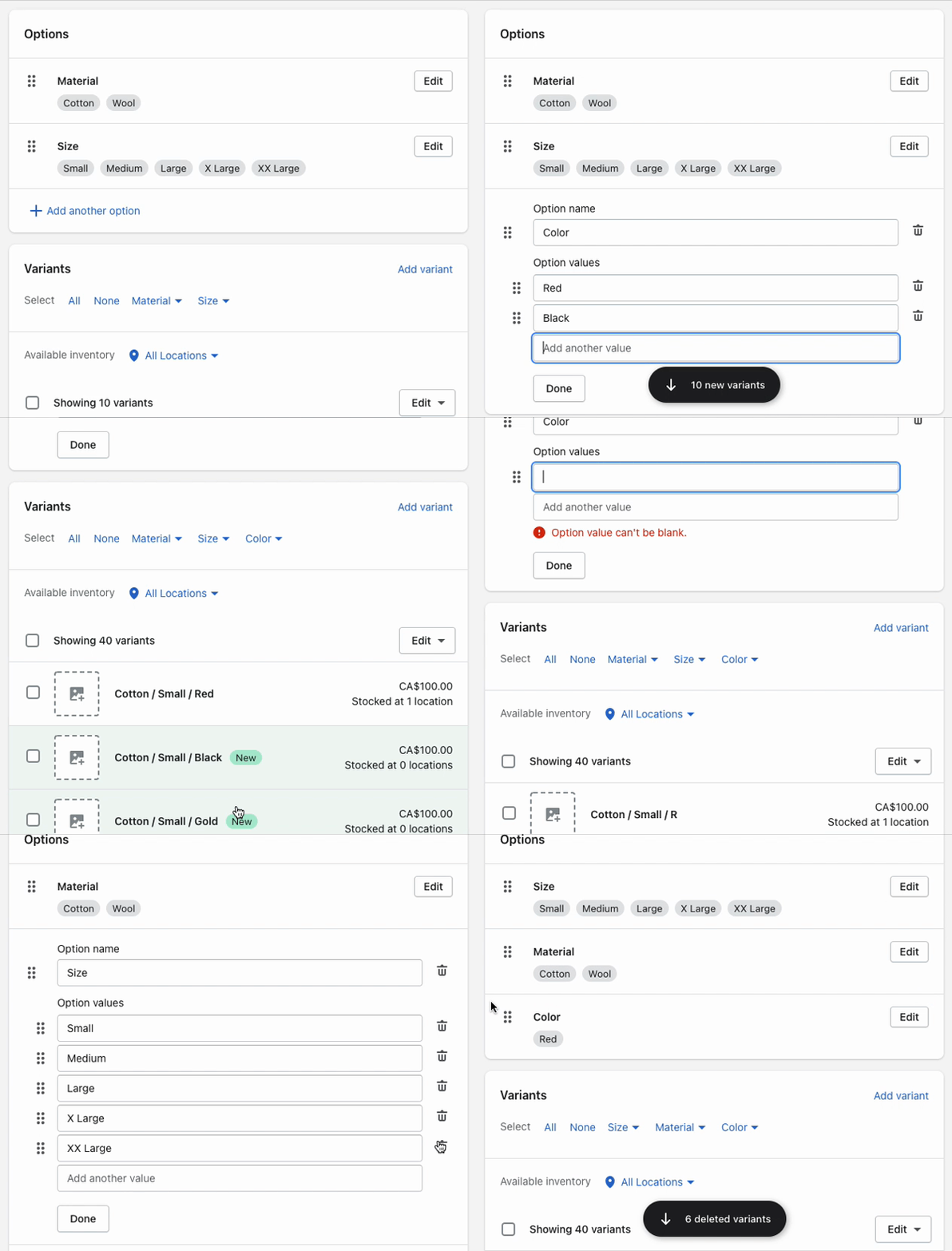
Merchants should be able to see results of their actions when managing their variants, giving them confidence to take actions fast.
Iterations
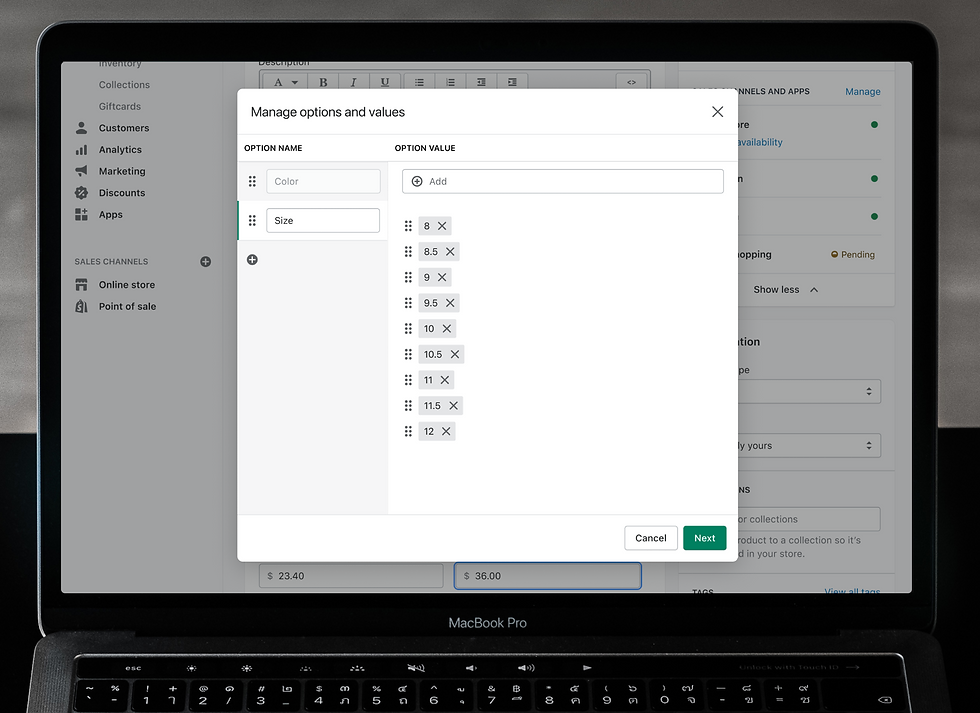
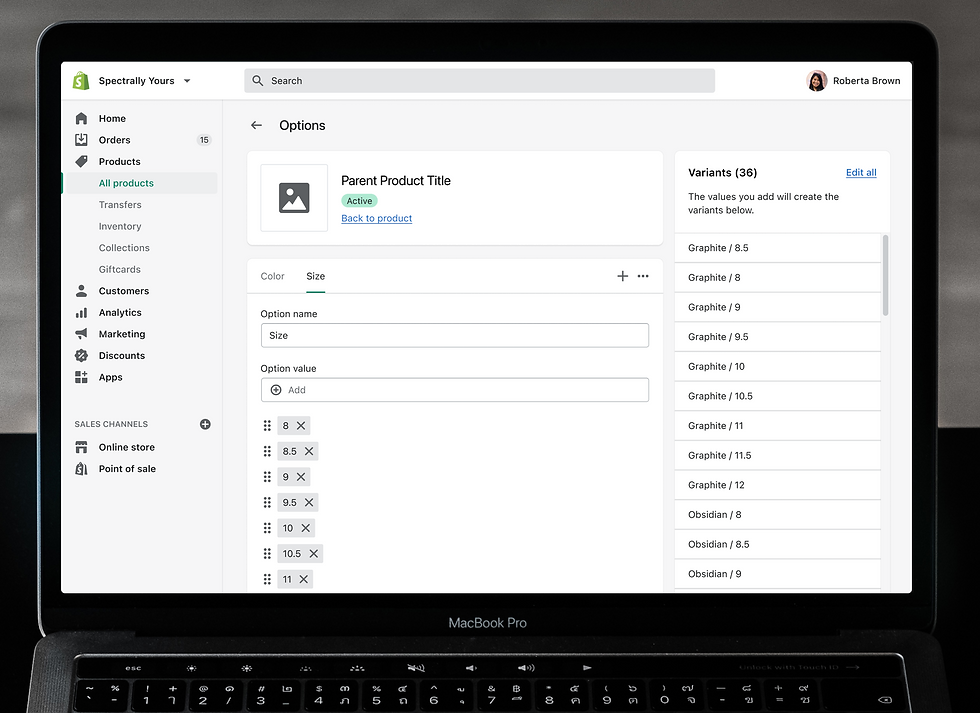
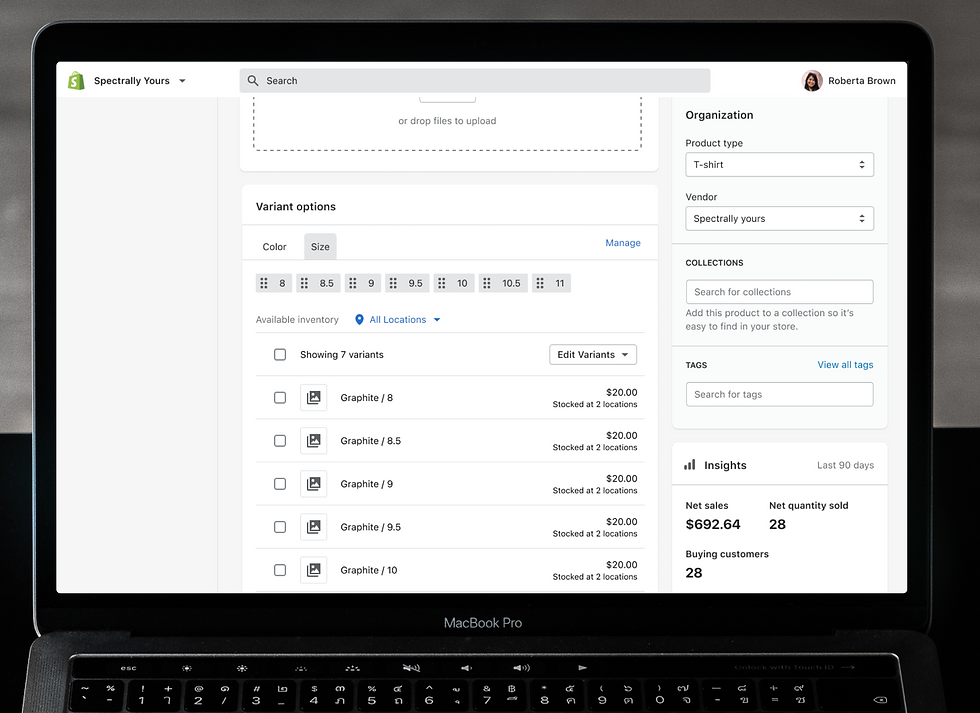
The team developed multiple iterations to solve the problem. Through a design critique process, I guided the team through decision-making that would enable them to practice more holistic thinking when considering end-to-end user flows and user Jobs to be Done.
This thinking provided the team with the design rationale they needed to build an argument for scope increase, in order to solve the problem in the right way.
The Solution
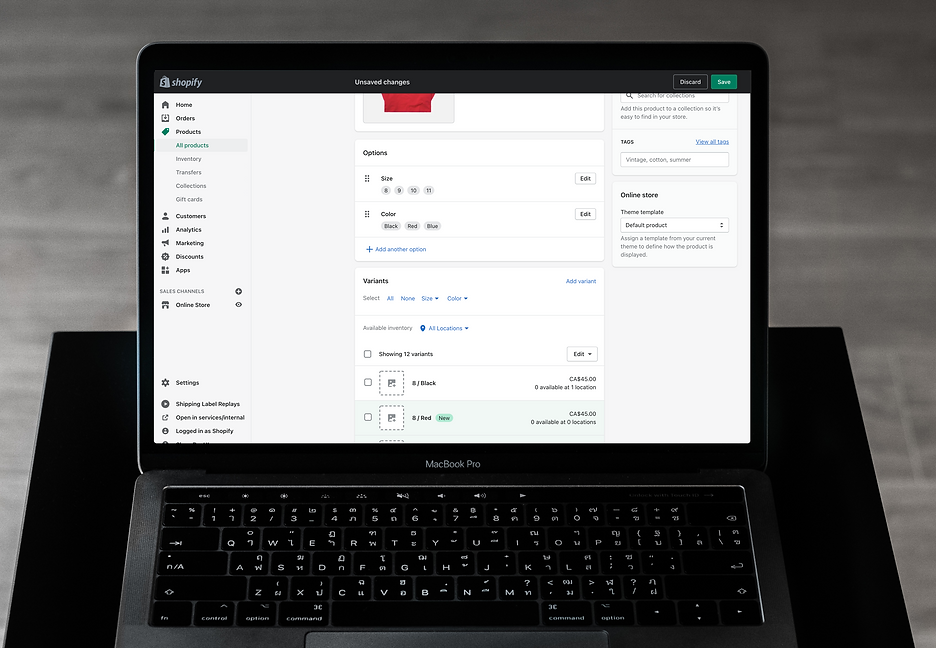
Data Entry Optimization
Research


Out with the Old, In with the New
A Senior Design Leader, Researcher and Strategic Thinker